
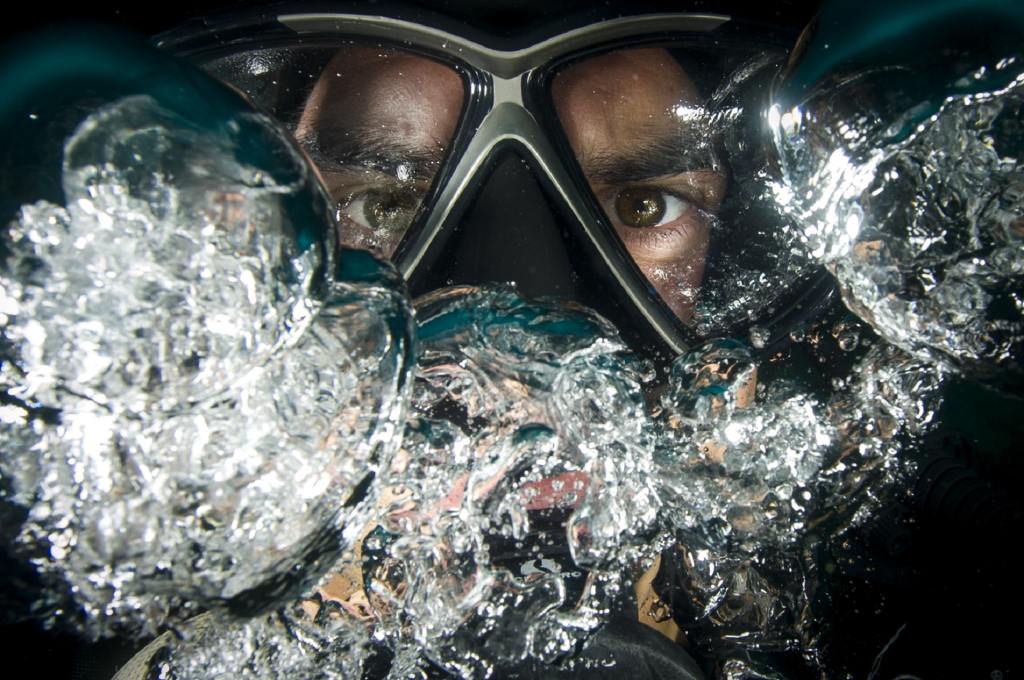
Scuba diving is a technical and expensive, but extremely rewarding sport for those that take part in it. Taking the dive into scuba diving will mean lots of work to learn what is necessary to dive safely while exploring wrecks, reefs and marine wildlife. If you have a curiosity about what lays beneath the water, you may consider taking a deeper look into scuba diving or talk to a scuba diver that you know. In this article, I will give you the tools you need to talk to such a person.
What’s great is scuba diving is probably closer to you than you might think. Typically, people think of diving somewhere warm and tropical, but that doesn’t always have to be the case. There are plenty who scuba dive in fresh water and lakes all around the country. It certainly helps to be near a large body of water, but a road-trip vacation to somewhere nearby is enough for most if they want to dip their toes into the world of scuba diving. Luckily, you don’t have to get in the water to learn about it. You can do that right here!
Fun Fact: Scuba is actually an acronym. It stands for self-contained underwater breath apparatus. So, what scuba divers use to dive down for long periods is the “scuba”.
Scuba Diving Lingo
BCD: Buoyancy Control Device. A vest worn by divers that helps them controls their buoyancy. It can be inflated or deflated to help them ascend or descend, respectively, in the water. Or it can be adjusted to help them maintain a neutral buoyancy so they stay level in the water.
Buddy System: The buddy system is very important in scuba diving and it is always recommended to dive with a buddy. There are lots of other terms that go along with the buddy system, such as buddy check (where divers inspect each others gear before getting in the water) or buddy breathing (where two divers take turns breathing with one apparatus in emergency situations).
DCS: Decompression Sickness. Also known as “the bends”, this condition occurs when divers ascend from a dive too quickly. The cause of this is dissolved gasses like nitrogen that don’t get the chance to leave the blood as divers ascend. Symptoms range from joint pain and itchy skin to numbness and paralysis.
Dive Flag: A flag that is typically red with a white stripe that indicates a diver is below. This is used to let other watercraft know there are divers in the area.
Dive Computer: A device worn on the diver’s wrist that tracks information such as depth, dive time, decompression limits and ascent rates (we don’t want to get decompression sickness). This helps divers plan and execute dives safely.
Freediving: Diving without a scuba. Basically, diving without a breathing apparatus. You can’t go for as long or as deep, but you’d be surprised how long some can hold their breath!
Nitrox: A breathing gas mixture used in diving that has a higher percentage of oxygen than regular air. This is to avoid excess buildup of nitrogen and allows for longer and safer dives.
Open Water: This refers to the basic level of scuba diving certification. Newly certified divers at the basic level can explore open water environments with supervision.
Regulator: The breathing apparatus that is connected to the scuba tank. Consists of a first stage, a second stage and a mouth piece.
Safety Stop: A pause during ascending from a dive, to allow nitrogen to filter out. This is a mandatory safety procedure to avoid or reduce the risk of decompression sickness.
Questions to Ask a Scuba Diver
Have you any memorable marine life encounters while diving?
You can see some pretty wild and wacky creatures when you go diving. Chances are, they have seen something weird or have a fish swim right up to them. Perhaps it was an angry puffer fish and poofed up right in front of them.
What has been your favorite place to dive so far?/Where would you like to dive that you haven’t been to yet?
Of course there are tons of places to dive and most divers have an idea where they want to go diving. Whether it’s because it’s the biggest reef in the world, or a certain wreck with historical significance. This should be a pretty easy win to get them talking.
Have you ever done or want to do a live-aboard trip?
The idea here is divers go over night on a boat so they can get to remote places that you couldn’t reach just off shore in a day. It can allow them to see some neat stuff that most people will never see, so if they have gone or want to go this is a great topic.
What is your favorite type of wreck dive?
There are many different kinds of wrecks. It could be structures, airplanes, shipwrecks, etc. They can tell you about what kind of sites they most like to visit, if it has any personal or historical significance, and so on.
Have you ever experienced nitrogen narcosis?
Also known as “rapture of the deep”, which is just subjectively a cooler name. This is an altered state of consciousness that happens when breathing compressed air and increased solubility of gases in the body, due to high pressures under the water. These experiences can range from funny to terrifying. Symptoms range from short-term memory loss to hallucinations.
Popular Scuba Diving Destinations
- The Great Barrier Reef, Australia: You’ve probably heard of this one. It’s the most iconic diving spot in the entire world. It’s the largest coral reef system in the world and it stretches for over 1,400 miles! It’s comprised of almost 3,000 individual reefs and can be seen from space.
- The Red Sea, Egypt: Another great location, the Red Sea has on average 360 days a year in good diving conditions. It’s high salt content and fewer rivers feeding into it means it has excellent diving conditions and visibility. There are plenty of diving resorts along the coasts, but live aboard is popular in this area as well to beat the crowd and see as much as possible.
- Galapagos Islands, Ecuador: These islands have strong conservation laws protecting them and are remote, some 850 or so miles from the coast of Ecuador. This makes for pristine diving where one can see fascinating sea life. They have diving experiences for beginners all the way up to expert divers looking for a challenge.
Safety and Preparedness
Safety is the number one rule when diving. Training and certifications, the buddy system, maintaining and inspecting equipment, doing pre-dive checks, using flags to mark where you are, being careful to ascend slowly and following other protocols. It can be a bit overwhelming. But that’s why training is required to dive. Better safe than sorry is what they say, and that’s the case with diving. One mistake or overlooked equipment check could mean the difference between life and death. I’m not trying to scare you, but that’s why safety is stressed so much in a hobby like diving. Checking out coral reefs and swimming with dolphins can be a life-changing experience, but safety will always come first.
History of Scuba Diving
Scuba diving has a surprisingly long and interesting history. It starts back in the time of Aristotle, where he described a diving bell (a chamber used to lower a diver below the surface). Technically, this isn’t ‘scuba’ diving as there is no independent breathing apparatus and the bell would still have to be lowered by a boat on the surface. However, it does show we have been trying to dive and explore the ocean for thousands of years. Scuba diving as we know it began when Henry Fleuss created the first ‘scuba’ in 1878. Frogmen (who would later be known as Navy SEALs) used early versions of scuba devices in World War II to carry out underwater missions. Then, in 1952, US Major Christian Lambertsen made modifications to the existing devices available and used the term “self-contained underwater breathing apparatus” (SCUBA) and it has been known as that ever since.
3 Ways to Get Started
- Scuba diving course.
- This is necessary if you want to do some scuba diving. In order to do even the most basic dives you will need certification, so if you are interested, find an instructor near you.
- Rent equipment.
- The equipment needed can be expensive. If you are just getting started or are just doing it on vacation, this is your best bet. You can rent and use equipment on resort dives.
- Start with free diving.
- Free diving (diving without a breathing apparatus) or snorkeling are great ways to start. You can still see a lot from the surface. If you still have a desire to dive deeper, you can always scuba dive later on.
3 Gift Ideas for Scuba Divers
- Underwater camera.
- This is a great way divers can documents what they saw or share it with loved ones. What better way to show someone what they saw below the waves than with a picture?
- Dive Log Book.
- Speaking of documenting, dive log books are great to help divers documents their dives. Not only what they saw, but where they went, how deep, the difficulty of the dive. It’s all great data to have and to help them decide where to go next, or to come back.
- Dive Watch.
- Another great and thoughtful gift, if you’ve ever wondered why some watches are called dive watches, this is it. They have better visibility in the water, are waterproof to a higher pressure rating and have other useful features for divers. Whether a Rolex or a Casio, this would be a great thing to get that diver in your life.
Final Thoughts
Writing this article got me pretty fired up about scuba diving. Having been a competitive swimmer for a good chunk of my life, I’m pretty comfortable in the water. As I researched to write this it made me realize scuba diving is a lot more accessible than I thought. If you really want to do this, you can and it’s a great experience. Whether you are looking to start or just want to be able to ask the scuba diver in your life how their latest dive was, I hope I was able to provide some more insight into this fascinating hobby. Thanks for reading and I’ll see you again soon.


 Interest Insider
Leave a comment